Trailer
The premise
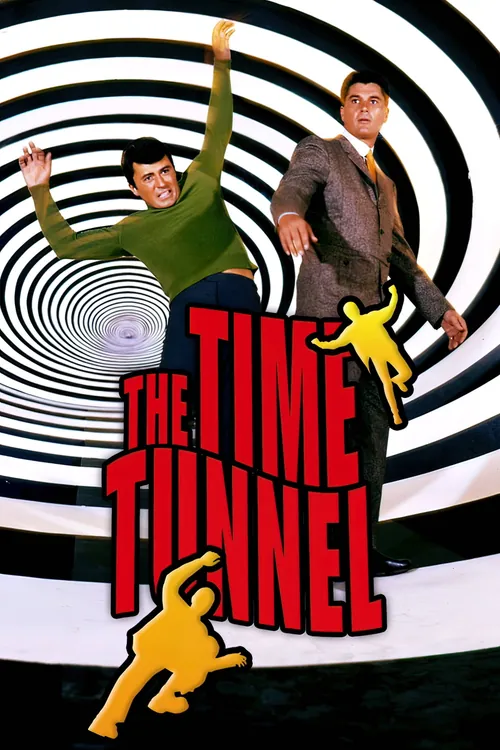
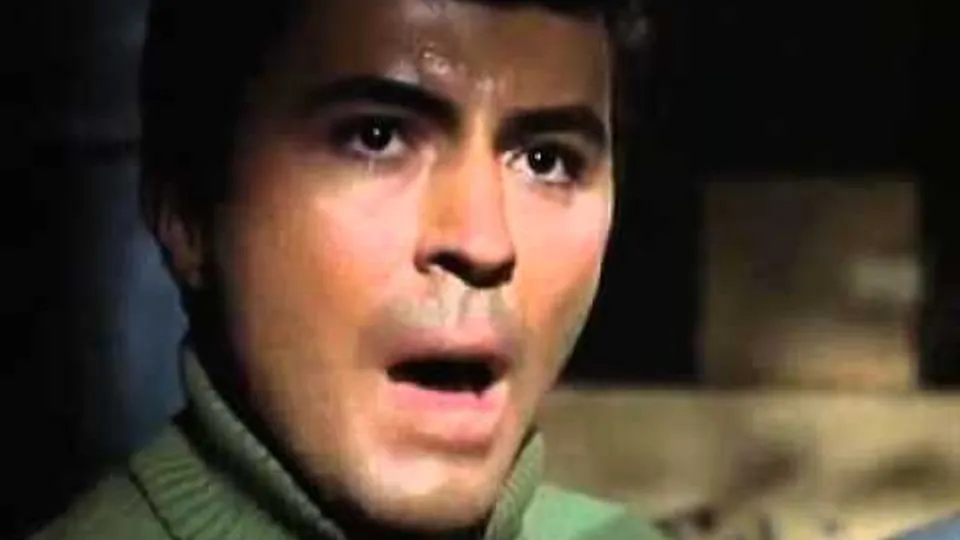
Project Tic-Toc is a top-secret U.S. government effort to build an experimental time machine: the Time Tunnel, an elliptical passageway into other eras. The base is a vast underground complex in Arizona. Dr. Doug Phillips, Dr. Tony Newman, and Lt. General Heywood Kirk run the project, with specialists Dr. Raymond Swain and Dr. Ann MacGregor.
In the premiere, "Rendezvous with Yesterday," a skeptical senator threatens to cut the project's huge funding unless Tic-Toc can send someone through time and bring them back during his visit. Tony jumps into the Tunnel against orders. Doug follows to save him. Both get lost in time. The senator leaves the funding in place, and the series locks into its engine: Tony and Doug land in a new moment each week while the control-room team tries to find them, watch them, sometimes talk to them, and pull them to safety—or at least to the next stop.
The in-story "present" is 1968, two years ahead of the 1966–67 broadcast season. Early stops lean on famous historical crises; later hours mix in more speculative science-fiction premises. Episodes two through 23 open with Dick Tufeld's narration about two American scientists lost in past and future ages during America's greatest secret project.
How it handles time
The Time Tunnel is less a vehicle than a corridor. Sources describe time as a static continuum the machine can open like a passageway. Characters talk about seeing "the living past," and Tony tells another character that past and future are the same. Once Tony and Doug are stranded, the weekly rhythm is simple: they drop into a period, get captured or cornered, try to escape, and the control room transfers or assists them when it can.
Kirk, Swain, MacGregor, and the rest can locate the travelers in time and space, watch them on monitors, occasionally establish voice contact, and move people between eras. The Tunnel connects both ways: people other than Tony and Doug often get brought into the present. Whether the travelers themselves get home is covered in the spoiler section.
History is not locked. The travelers and staff learn that intrusion can bend past events to some extent. A few plots use historical research as a warning about what "will" happen if the pair stay on a collision course with the record—Billy the Kid's victims are the example Wikipedia cites. That is more adventure pressure than a hard law of causality.
Later episodes visit future settings and bring in alien figures, often in the metallic silver costumes familiar from other Irwin Allen shows of the era. The format stays anthology: a teaser of next week's landing at the end of most hours (with one noted teaser exception after episode three), heavy reuse of Fox period stock footage, limited guest costuming, and (after the larger pilot set) a single main Tunnel control-room set. Colbert and Darren are often shot separately from the control-room cast.
So the specialty question: does it stick to its own rules? Only loosely. The Tunnel-as-corridor image and the split between stranded heroes and watching staff stay consistent. How much history can change, and how precise the transfers are, shift with the needs of the hour. Treat it as portal-adventure logic, not a puzzle box.
What works
Darren and Colbert sell the buddy-in-peril chemistry that keeps a formula show hanging together. You always know who is the impulsive jumper and who is the project director trying to clean up the mess. Bissell, Zaremba, and Meriwether give the control room a steady face: worried monitors, urgent talk-back, another attempt to lock onto the signal.
Allen's production machine is the other draw. Fox period sets and stock footage (including tinted black-and-white Titanic shots) put Tony and Doug next to the Titanic, Pearl Harbor, Krakatoa, the Little Bighorn, the Alamo, and other textbook crises without a modern VFX budget. Prop computer modules reportedly came from a decommissioned U.S. Air Force SAGE system. The photographic special effects won an Emmy in 1967 for L.B. Abbott (Individual Achievements in Cinematography — Photographic Special Effects).
The theme, credited to Johnny Williams (John Williams), gives the show a punchy network-era identity. Soundtrack collectors later got GNP Crescendo album material and, in 2021, extensive episode-score CD sets from La-La Land Records. Episode music across the run is also credited to composers such as Lyn Murray, Leith Stevens, Paul Sawtell, Robert Drasnin, and Joseph Mullendore.
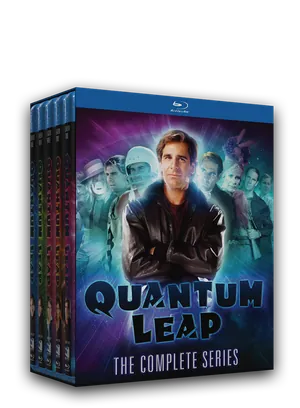
For time-travel TV history, the show matters beyond its own season. Wikipedia's Quantum Leap (1989) article lists The Time Tunnel among the inspirations Donald P. Bellisario drew on for that later premise. If you care where the "scientists lost in time, home base watching" template came from on American network TV, this is a primary text.
What doesn't
The hour is a loop of its own: capture, detention, escape, next landing. Across 30 episodes that cycle wears thin if you binge. Stock footage and reused Fox period dressing also show their seams; historical accuracy slips (in the premiere, Titanic Captain Smith is called "Malcolm" instead of Edward).
ABC canceled the show after one season. According to Wikipedia, the ratings were solid and ABC pointed to the show as "one of the few successes in a disastrous schedule," then dropped it in favor of The Legend of Custer, which itself was canceled after 17 low-rated episodes. You get adventure, not closure.
The time logic will not survive a hard stare. Continuity oddities sit in the record (see spoilers), and "history can bend a little" is a permission slip more than a rulebook. If you came for bootstrap paradoxes and closed loops, this is the wrong corridor.
Final score
Overall: 6/10. A lively Irwin Allen portal anthology with Emmy-winning effects and a clear ancestor line to later time-travel TV, held back by formula, stock-footage shortcuts, and a cancellation that leaves the arc unfinished.
Paradox Meter: 2/5. The Tunnel and the watching control room are vivid and steady; how far history can change, and how cleanly the transfers work, bend whenever the plot needs a new scrape.
If you liked this
Frequently asked questions
Is The Time Tunnel a time-travel show?
Yes. Two scientists, Dr. Tony Newman and Dr. Doug Phillips, become stranded after entering Project Tic-Toc's experimental Time Tunnel, and each episode drops them into a new past or future landing while the control room tries to help.
How does time travel work in The Time Tunnel?
The Time Tunnel is a corridor into a static continuum of time. The control room can locate the travelers, watch them on monitors, sometimes talk to them, and transfer people between eras. History can bend a little when they interfere, so the Paradox Meter is 2/5, "Loose."
How many seasons and episodes of The Time Tunnel are there?
One season and 30 episodes, broadcast on ABC from September 9, 1966 ("Rendezvous with Yesterday") to April 7, 1967 ("Town of Terror").
Why was The Time Tunnel canceled?
Not for its ratings, according to Wikipedia: it calls them solid and says ABC pointed to the show as "one of the few successes in a disastrous schedule," then dropped it after one season in favor of The Legend of Custer, which was itself canceled after 17 low-rated episodes.
Is The Time Tunnel (1966) worth watching?
Yes, if you like period sci-fi anthologies and Fox stock footage doing heavy lifting: it gets a 6/10 here. Skip it if you want airtight paradoxes or a finished arc.
How consistent is the time logic in The Time Tunnel?
Loose. Paradox Meter: 2/5. The Tunnel-as-corridor image and the watching control room stay steady; how far history can change, and how cleanly transfers work, bend whenever the hour needs a chase.
What should I watch after The Time Tunnel?
Try Quantum Leap (1989), which Wikipedia names as drawing on The Time Tunnel.
⚠ Spoilers: the timeline explainedShow spoilersHide spoilers
ABC canceled the series in summer 1967 before an episode could bring Tony and Doug safely back to the Time Tunnel complex. The broadcast finale is "Town of Terror" (April 7, 1967), not a resolution of their exile.
Their only return to their own time during the run is in "Merlin the Magician": Merlin uses magic to bring them home in suspended animation so he can brief them for a mission. Wikipedia describes that as the only occasion they return to their own time in the series.
Tony's birth year is an in-show conflict Wikipedia notes and never explains. Early on he tells the senator he was born in 1938 (age 30 in the 1968 setting); episode three implies he was seven at Pearl Harbor, which points to a 1934 birth year. Do not treat either date as settled continuity.
A few plots lean into how much history might change. In "Attack of the Barbarians," Tony falls in love with Princess Serit, daughter of Kublai Khan, and control-room research even hints historically at a possible marriage. Separately, research on Billy the Kid's victims alarms the team because the record includes two strangers killed near Lincoln, New Mexico, in April 1881—matching when Tony and Doug meet him. Those beats treat the historical record as a threat board, not a fixed script.
Remake attempts sit outside this review's score: a 1976 TV film (Time Travelers), a 2002 unaired Fox pilot (darker tone; Doug Phillips / Toni Newman; a "time storm"; sample mission to the 1944 Battle of Hürtgen Forest; Fox did not order the series), and a 2006 Sci Fi Channel script that never went past pilot-script stage. The 2002 pilot appears on Fox's The Time Tunnel: Volume Two DVD.
Spoiler questions
Do Tony and Doug ever make it home in The Time Tunnel?
No lasting homecoming. ABC canceled the show before an episode could return them safely. Their only return to their own time during the run is in "Merlin the Magician," via Merlin's magic and suspended animation for a briefing.
How does The Time Tunnel end?
The broadcast finale is "Town of Terror" (April 7, 1967), not a resolution of their exile. Wikipedia says ABC canceled the series in summer 1967 before production could film a safe return to the complex.
Sources
Catalogue entry
Research dossier behind this review (22 sources)
- Wikipedia, "The Time Tunnel" (retrieved 5 Oct 2026)
- Wikidata, Q596962 "The Time Tunnel" (retrieved 5 Oct 2026)
- Wikipedia episode table within "The Time Tunnel" (30 numbered episodes, premiere 9 Sep 1966, finale "Town of Terror" 7 Apr 1967; retrieved 5 Oct 2026)
- TMDB, "The Time Tunnel" (TV id 103; retrieved 5 Oct 2026)
- IMDb, "The Time Tunnel" (tt0060036; listed on Wikipedia/Wikidata; IMDb HTML returned 403 to automated fetch on 5 Oct 2026 — identity confirmed via Wikidata P345 and Wikipedia external links, not via a live IMDb parse)
- Television Academy, "The Time Tunnel" Emmy Awards and Nominations (retrieved 5 Oct 2026)
- JustWatch US, "The Time Tunnel" (retrieved 5 Oct 2026; page stamp 3 Oct 2026)
- JustWatch UK, "The Time Tunnel" (retrieved 5 Oct 2026; page stamp 3 Oct 2026)
- JustWatch Italy — page not found for tested slugs on 5 Oct 2026 (UNVERIFIED). Do not treat as a positive availability source
- Wikidata entity data JSON for Q596962 (composer P86 = John Williams Q131285; episodes P1113 = 30; start/end dates; IMDb/TMDB ids; retrieved 5 Oct 2026)
- Wikidata, Q131285 "John Williams" (composer credit target for P86; retrieved 5 Oct 2026)
- Wikidata, Q740071 "Irwin Allen" (creator P170; retrieved 5 Oct 2026)
- TVmaze, "The Time Tunnel" (show id 1135; retrieved 5 Oct 2026)
- TVmaze API show+cast payload for id 1135 (retrieved 5 Oct 2026)
- Italian Wikipedia, "Kronos - Sfida al passato" (retrieved 5 Oct 2026)
- Wikipedia, "Quantum Leap (1989 TV series)" — inspiration sentence naming The Time Tunnel (retrieved 5 Oct 2026)
- IMDb, "The Time Tunnel" 2002 pilot (tt0313707; via Wikipedia external links; retrieved 5 Oct 2026)
- Wikipedia, "Time Travelers (1976 film)" (linked from The Time Tunnel remake section; retrieved 5 Oct 2026)
- Archive of American Television / Emmy TV Legends interview cited by Wikipedia’s Quantum Leap article for Bellisario inspiration context (YouTube id n4tWz9euUiI; cited via [16]; treat details beyond Wikipedia’s summary as needing direct verification before quoting)
- GNP Crescendo / soundtrack release claims as stated on Wikipedia "The Time Tunnel" (album The Fantasy Worlds of Irwin Allen; retrieved 5 Oct 2026 via [1])
- La-La Land Records 2021 score releases as stated on Wikipedia "The Time Tunnel" (retrieved 5 Oct 2026 via [1])
- Loop & Branch internal design note, design/background-animations.md — Tunnel Pull inspiration (repo file; not a public claim about the show’s IP)
Poster and trailer
- Official poster: The Movie Database (TMDB)
- Official trailer: “The Time Tunnel UK DVD”, Revelation Films on YouTube
Review by Loop & Branch Editorial. Published . Scores explained in How we review.