Trailer
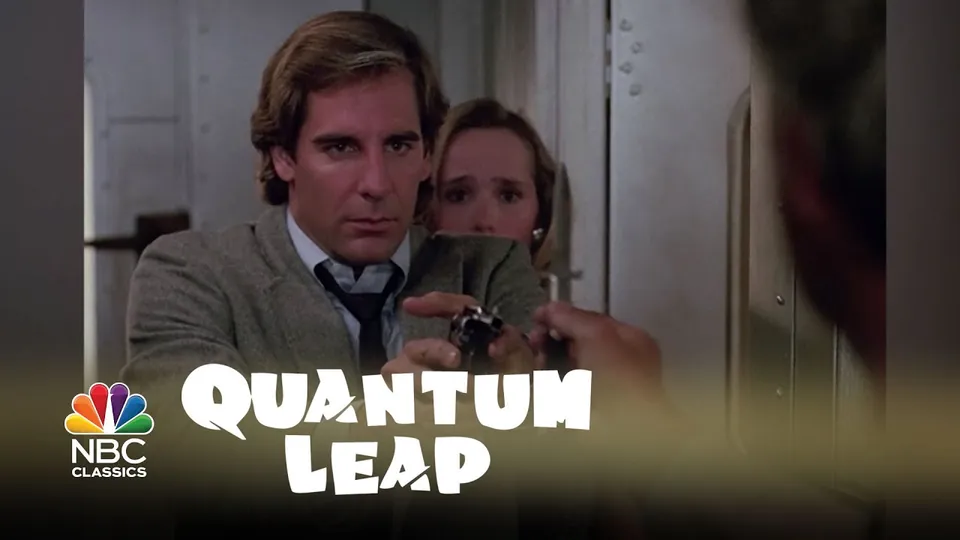
The premise
Dr. Sam Beckett (Scott Bakula) is a physicist with a theory: a person could time-travel within his own lifetime. He gets government backing for the idea, and years later Project Quantum Leap has cost $43 billion and its funding is under threat. So Sam tests the accelerator on himself, without telling anyone.
He wakes up in the past with partial amnesia, which he compares to a hunk of Swiss cheese. He's physically there, but everyone else sees the person he has "leapt" into. In the two-hour pilot, "Genesis," he first works this out when a stranger's face looks back at him from the mirror while he's shaving. Small wonder his catchphrase on arrival is "Oh, boy!"
His help is Rear Admiral Albert "Al" Calavicci (Dean Stockwell), his best friend and the project's Observer, who appears as a hologram only Sam can see and hear. With the project's supercomputer, Ziggy, feeding him information, Al tells Sam that something here "went wrong" and he has to fix it. Once he does, he's off into another life, hoping each time that this one will be the leap that takes him home.
Most episodes stand alone, with a new host, a new year, and a new set of people around him. The show can be a comedy one week and a social drama the next, with romance and science fiction mixed in.
How it handles time
The pitch carries the first rule: Sam travels, with rare exceptions, only within his own lifetime. His in-story birthday is August 8, 1953, so nearly every leap lands somewhere between the '50s and the near future he left. For a network drama that's a smart limit: a fresh period setting every week, with no history lecture required.
The mirror is the show's best device. Other characters see the host and the audience sees Bakula; the host's face only shows up as Sam's reflection, which Wikipedia calls "the usual way that the host is shown during an episode." The opening narration, as The A.V. Club transcribes it, has Sam "facing mirror images that were not his own," and every mirror in a scene reminds you whose life he's borrowing.
Al has rules of his own. He's a hologram tuned to Sam's brainwaves, projected from the Imaging Chamber back at the project, so normally nobody else in the scene knows he's there. Al reads Ziggy's answers off a handheld device that Wikipedia describes as "faulty." Meanwhile, the person Sam replaced waits back at the project, in the Waiting Room.
Sam also designed Ziggy, the "parallel hybrid computer with a massive ego" (Wikipedia's phrase). Ziggy has a feminine personality, holds historical records covering Sam's lifetime, and can project the likely effect of Sam's actions on history. Its forecasts come as probabilities, and I like that choice a lot. Al can tell Sam the odds went up or down, and the plot gets a running scoreboard without becoming a checklist.
What moves Sam from life to life is left vague on purpose. Ziggy works on the assumption that Sam has to change the past to correct the future before he can go home, and in the pilot Al suggests some unknown influence (Wikipedia sums it up as "God, Fate, or Time") is using Sam to fix mistakes. The memory gaps are part of the design, too. Deborah Pratt credits Bellisario with the idea and says Al "was not allowed to tell him what was happening in the present." Wikipedia adds that the holes let the writers fill in Sam's character as the show went on.
So does it keep its own rules? Mostly. Lifetime only, the mirror, and the invisible Al hold for the bulk of the run, and the later seasons bend each of them at least once (the details are in the spoiler section). Because nobody aims the leaps, the show rarely has to answer for a paradox. The leap simply ends when the job is done.
What works
Bakula has to rebuild Sam inside a different life every week while playing a man who can't remember his own. He won the Golden Globe for Best Performance by an Actor in a Television Series – Drama in 1992 and was nominated for the lead-actor Emmy every year from 1990 to 1993. Stockwell won the Golden Globe for supporting actor in 1990 and matched Bakula's four Emmy nominations. The partnership outlived the show: they reunited on Star Trek: Enterprise ("Detained," 2002) and NCIS: New Orleans ("Chasing Ghosts," 2014).
The anthology engine is the other big asset. Bellisario saw the premise as a way to make an anthology series at a time when networks didn't like them, and the range shows in the awards list. "Good Night, Dear Heart" won an Edgar Award for Best Television Episode for writer Paul Brown, and Michael Zinberg won a DGA Award for directing "The Leap Home (Part 2) – Vietnam."
The weekly reset also makes for a fun guest list. The Golden Globes' cast list for the show includes Jennifer Aniston, Joseph Gordon-Levitt, Neil Patrick Harris, Jason Priestley, Teri Hatcher, and Roddy McDowall. Sam also crosses paths with real people such as Buddy Holly, Marilyn Monroe, and Michael Jackson, and in one episode he leaps into Dr. Ruth Westheimer, who plays herself.
The craft got noticed, too. The show won six Emmys from 32 nominations, according to the Television Academy, including cinematography in 1989 (Roy H. Wagner, for the pilot), 1990, and 1991 (both Michael Watkins), plus hairstyling and makeup awards and a 1993 editing win for Jon Koslowsky. Mike Post wrote the theme. Pratt's narration, which plays at the start of nearly every episode according to The A.V. Club, gives the show its mission statement: "put right what once went wrong."
What doesn't
The future barely exists on screen. Project Quantum Leap's staff, including head programmer Gooshie (Dennis Wolfberg), psychiatrist Dr. Verbena Beeks (Candy Ann Brown), and medical technician Tina (Gigi Rice), are mentioned often but appear in only a handful of episodes. With so little of that world in view, the "leap home" stays more of a refrain in the narration than a place I ever pictured.
The formula is also the format. Nearly every hour runs on the same track of arrival, mirror, Al's briefing, and a fix, and across 97 episodes that repetition shows if you watch several in a row. I'd take it one or two episodes at a sitting.
And sometimes history gets personal. The two-hour "Lee Harvey Oswald," the Season 5 premiere, was written by Bellisario, who, per Wikipedia citing the Los Angeles Times, met the real Oswald in 1959 when both were in the Marine Corps. He wrote the episode in response to the 1991 film JFK, so it comes with a point of view on a real case. That's worth knowing before you press play.
Check the music before you buy discs. Universal's remastered DVDs replaced many original songs for rights reasons (Season 5 kept all of its music), and fans objected. Mill Creek's complete-series DVD and Blu-ray from February 7, 2017, restored most of the original music.
Final score
Overall: 8/10. The two leads and the anthology range earn it, while the thin future and the weekly formula keep it from a 9.
Paradox Meter: 3/5. The three core rules are clear and visual, but the "unknown force" covers every question the show would rather not answer, and the later seasons bend all three.
If you liked this
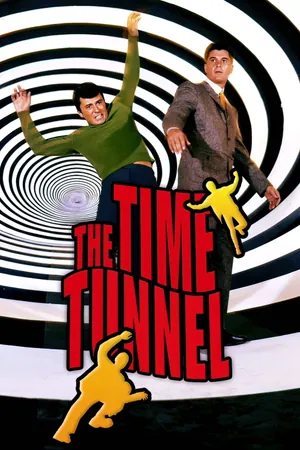
The Time Tunnel
Avengers: Endgame
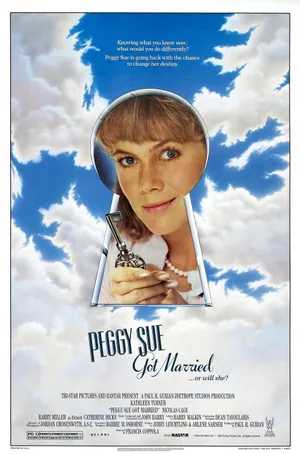
Peggy Sue Got Married
- Quantum Leap (2022): NBC's revival, which follows the original's continuity and ran for two seasons without Bakula. (not on the site yet)
- Source Code (2011): Duncan Jones gave Bakula a voice cameo, "Oh, boy" included, as a nod to the show. (not on the site yet)
Frequently asked questions
Is Quantum Leap a time-travel show?
Yes. Physicist Dr. Sam Beckett (Scott Bakula) tests Project Quantum Leap's accelerator on himself and starts leaping into other people's lives, mostly within his own lifetime, while everyone around him sees the person he has replaced.
How does time travel work in Quantum Leap?
It runs on three simple rules: Sam leaps mostly within his own lifetime, his host's face shows up only in the mirror, and Al is a hologram only Sam can see and hear. An "unknown force" the show keeps deliberately vague does the steering, so the Paradox Meter is 3/5, "Works if you don't push it."
How many seasons and episodes of Quantum Leap are there?
Five seasons and 97 episodes, broadcast on NBC from March 26, 1989, to May 5, 1993. Season 1 has 9 episodes and Seasons 2–5 have 22 each, with two-hour episodes counted as two: the pilot, "Genesis," and the Season 5 premiere, "Lee Harvey Oswald."
Who created Quantum Leap, and who stars in it?
Donald P. Bellisario is the credited creator; Deborah Pratt, the voice of Ziggy, is called an "uncredited co-creator" in her Wikipedia article and a profile in The Companion. Scott Bakula (Dr. Sam Beckett) and Dean Stockwell (Al Calavicci) star, and both won Golden Globes for it: Stockwell in 1990, Bakula in 1992.
Is Quantum Leap (1989) worth watching?
Yes, if you'd rather meet a new stranger every week than follow one giant puzzle: it gets an 8/10 here, mostly for the Bakula–Stockwell friendship and the anthology range. The thin future and the weekly formula keep it from a 9.
Is this the original Quantum Leap or the 2022 revival?
The original: this review covers the NBC series that ran from 1989 to 1993. The 2022 revival, also on NBC, follows the original's continuity and was canceled on April 5, 2024, after two seasons; Scott Bakula declined to return.
⚠ Spoilers: the timeline explainedShow spoilersHide spoilers
The lifetime rule breaks twice. In "The Leap Back" (the Season 4 premiere, September 18, 1991), Sam and Al swap places and Sam briefly returns to the project. In "The Leap Between the States" (Season 5, March 30, 1993), Sam leaps into an ancestor during the American Civil War, in 1862. Wikipedia's own pages disagree on whether that ancestor is his great-grandfather or great-great-grandfather.
Al's invisibility has exceptions on screen, too. In "A Tale of Two Sweeties" (Season 5) a child is "young enough to see him," and in "It's a Wonderful Leap" (Season 4) a woman claiming to be an angel can see him. According to the fan FAQ from the rec.arts.sf.tv.quantum-leap newsgroup, the list also covers animals and people near death.
Season 5 turns the whole setup inside out. In "Deliver Us from Evil" (November 10, 1992), Sam meets Alia (Renée Coleman), a Leaper guided by her own Observer, Zoey (Carolyn Seymour), whose job is to "put wrong what once went right." The two Leapers see each other as their hosts until they touch, and Zoey can see Sam while he can't see her. Alia comes back twice, and in "Revenge of the Evil Leaper" she escapes the evil project with Sam's help. Zoey becomes the new Evil Leaper, with Thames (Hinton Battle) as her Observer. It's the best use of the rules in the series, because every convention gets a mirror twin.
In "Lee Harvey Oswald," Oswald turns out to be the lone assassin, which matches Bellisario's own belief (his view, not established fact). Sam's last leap is into Secret Service agent Clint Hill, and Al reveals the real mission was to save Jacqueline Kennedy, who died along with JFK in the show's original timeline.
The finale, "Mirror Image" (Season 5, Episode 22), finally explains the force, at least partly. Sam arrives as himself in a mining-town bar in Cokeburg, Pennsylvania, on August 8, 1953, the date and hour of his birth, and for the first time the mirror shows his own face. The patrons resemble people from past leaps. A bartender named Al (Bruce McGill, who was also in the pilot) denies being God and tells Sam he controls his own leaps and could go home whenever he wanted. Instead of going home, Sam leaps to 1969 to tell Al's first wife, Beth, that Al is alive.
According to Wikipedia, the episode was written to work as either a season or a series finale. When the show wasn't renewed, two title cards were added: Beth never remarried, so she and Al are still married with four daughters, and Sam never returned home. Viewers had mixed feelings, by the same account. I'm glad the answer is Sam himself (subconsciously, per Wikipedia's character article), since it puts every earlier leap in a new light, but the cards close the story far too quickly.
Spoiler questions
How does the original Quantum Leap end?
In the finale, "Mirror Image" (May 5, 1993), Sam arrives as himself in a Cokeburg, Pennsylvania, bar at the hour of his birth, and a bartender named Al tells him he controls his own leaps and could go home whenever he wanted. Instead, Sam leaps to 1969 to tell Al's first wife, Beth, that Al is alive.
Does Sam Beckett ever make it home?
No. According to Wikipedia, two title cards were added when the show wasn't renewed: Beth never remarried, so she and Al are still married with four daughters, and Sam "never returned home" (with his name misspelled "Becket" on screen).
Who is the Evil Leaper in Quantum Leap?
Alia (Renée Coleman), introduced in "Deliver Us from Evil" (Season 5): a Leaper guided by her Observer, Zoey (Carolyn Seymour), to "put wrong what once went right." In "Revenge of the Evil Leaper" she escapes with Sam's help, and Zoey becomes the new Evil Leaper, with Thames (Hinton Battle) as her Observer.
Sources
Catalogue entry
Research dossier behind this review (25 sources)
- Wikipedia, "Quantum Leap (1989 TV series)" (retrieved 2 Oct 2026)
- Wikipedia, "List of Quantum Leap (1989 TV series) episodes" (retrieved 2 Oct 2026)
- Wikipedia, "Quantum Leap season 1" (retrieved 2 Oct 2026)
- Wikipedia, "Quantum Leap season 4" (retrieved 2 Oct 2026)
- Wikipedia, "Quantum Leap season 5" (retrieved 2 Oct 2026)
- Wikipedia, "List of Quantum Leap (1989 TV series) characters" (retrieved 2 Oct 2026)
- Wikipedia, "Sam Beckett" (retrieved 2 Oct 2026)
- Wikipedia, "Deborah Pratt" (retrieved 2 Oct 2026)
- Television Academy, "Quantum Leap: Emmy Awards and Nominations" (retrieved 2 Oct 2026) (redirect from emmys.com/shows/quantum-leap)
- Golden Globes, "Quantum Leap" awards database page (retrieved 2 Oct 2026)
- Golden Globes, "Scott Bakula" (retrieved 2 Oct 2026)
- Golden Globes, "Dean Stockwell" (retrieved 2 Oct 2026)
- TVmaze, "Quantum Leap" show data, cast and crew (show ID 717; retrieved 2 Oct 2026)
- Wikidata, Q230506 "Quantum Leap" (retrieved 2 Oct 2026)
- The A.V. Club, "TV Club Classic returns with Quantum Leap" (review of "Genesis"; page checked 2 Oct 2026)
- Al's Place (fan episode guide), "Mirror Image" (retrieved 2 Oct 2026)
- Al's Place (fan site), "Saga Sell Series Introduction Variations" (search excerpt checked 2 Oct 2026)
- rec.arts.sf.tv.quantum-leap "Quantum Leap FAQL" (fan FAQ, archived copy; search excerpt checked 2 Oct 2026)
- JustWatch US, "Quantum Leap" (retrieved 3 Oct 2026; first fetched 2 Oct 2026, 07:30 CEST)
- JustWatch UK, "Quantum Leap" (retrieved 3 Oct 2026; first fetched 2 Oct 2026, 07:30 CEST)
- JustWatch Italy, "In viaggio nel tempo" (retrieved 3 Oct 2026; first fetched 2 Oct 2026, 07:30 CEST)
- YouTube, NBC Classics, "Quantum Leap - Show Trailer | NBC Classics" (uploaded 11 Dec 2014; checked 2 Oct 2026), and "Quantum Leap - Original Show Intro | NBC Classics" (also youtube.com/watch?v=yE_L2NSuSNs)
- YouTube, NBC Classics channel "About" page (joined 20 Jun 2014; links to nbc.com/classic-tv), and NBC.com Classic TV page (checked 2 Oct 2026) (also nbc.com/classic-tv)
- Apple TV, "Quantum Leap" listing ("1989 · 45m", TV-PG, "© 1989 - 1993 Universal City Studios LLLP"; search excerpt checked 2 Oct 2026)
- The Companion, "Quantum Leap | How Deborah M. Pratt Gave the Show Its Heart" (search excerpt checked 2 Oct 2026)
Poster and trailer
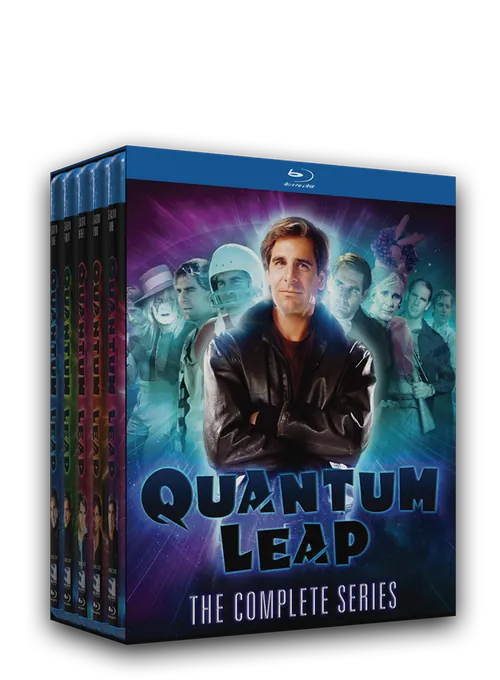
- Official poster: millcreekent.com
- Official trailer: “Quantum Leap - Show Trailer | NBC Classics”, NBC Classics on YouTube
Review by Loop & Branch Editorial. Published . Scores explained in How we review.